Summer / Winter / Climate
Perfumes by season
Climate changes how a fragrance projects. A perfect composition in January can feel heavy in August; a bright citrus cologne can fall short on a cold night.
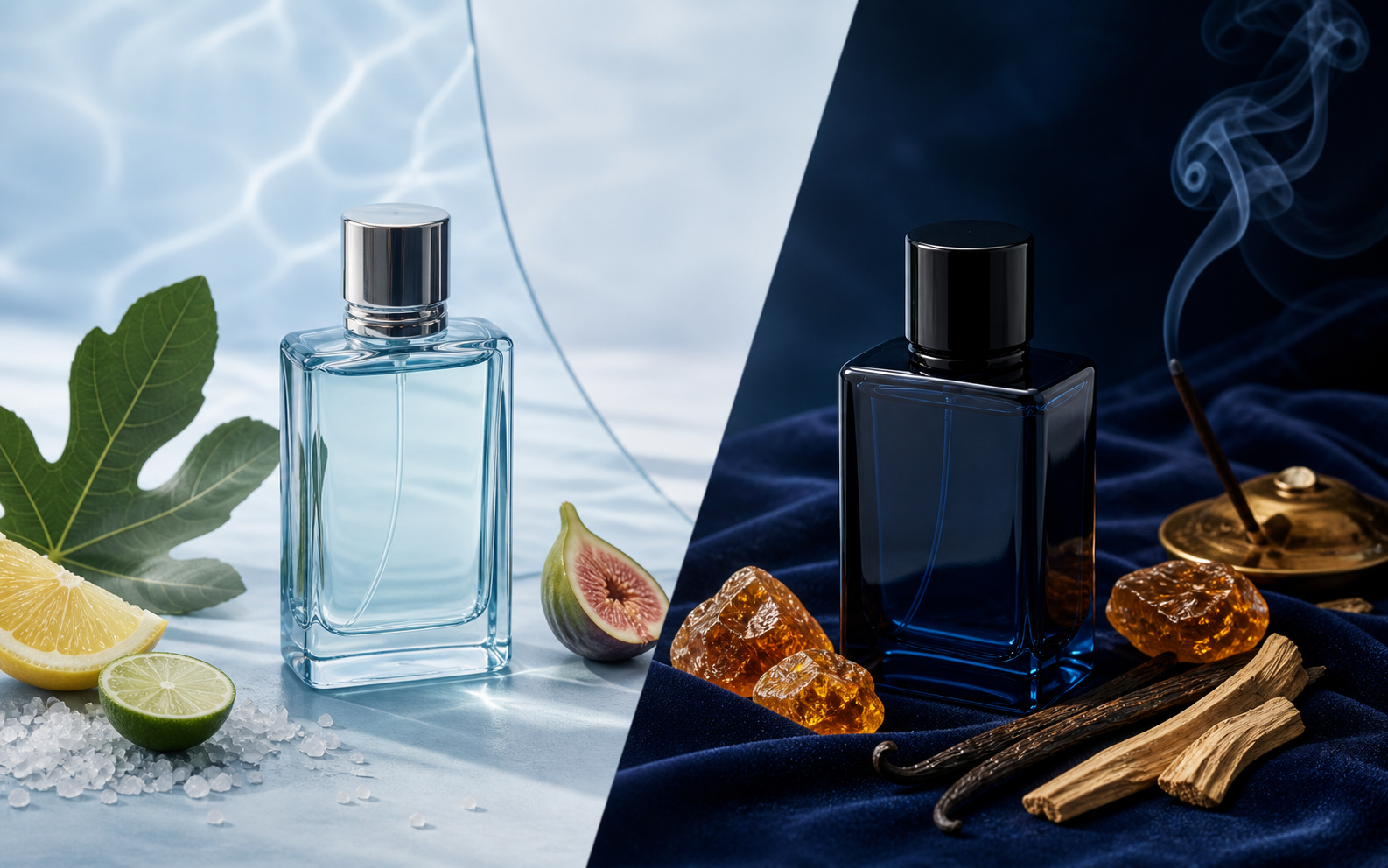
Boosts diffusion. In summer it is better to reduce sweetness and dose.
Dampens volátility. Dense bases work better in winter.
Can make a fresh or musky fragrance feel more present.
Office and transport call for a controlled trail.
Seasonal map
Profiles to look for in each season
Spring
Transparent florals, clean musks, soft green notes, neroli and luminous iris.
Summer
Citrus, aromatics, aquatics, fig, tea, mint and very light woods.
Autumn
Soft spices, woods, light tobacco, clean leather, dark fruits and moderate amber.
Winter
Vanilla, resins, incense, oud, leather, tonka, cocoa and dense amber.
Suggestions
Perfume examples by season
The suggestions combine climate and olfactory density with the reading of notes and accords available on Fragrantica.
Chanel Chance Eau Tendre
A soft fruity floral, easy to wear when light increases but the weather is not extremely hot yet.
Byredo Blanche
Clean musks and rose for mild days and close settings.
Jo Malone Wood Sage & Sea Salt
Salty, aromatic and light; a good example of freshness without feeling like a simple citrus cologne.
Hermes Eau d’Orange Verte
Green sparkling citrus for heat, daytime use and generous dosing.
Terre d’Hermes Eau de Toilette
Orange, pepper and vetiver for mild, dry and elegant weather.
Le Labo Santal 33
Spiced wood and soft leather when you want more texture.
Guerlain Shalimar Eau de Parfum
Amber vanilla and bergamot with body for cold weather.
Tom Ford Oud Wood
Dark woods and cardamom in a sober style, better with a low dose.